
2026 Graduation: MSUPE Successfully Implements a New Model of Post-Graduate Support for Young Professionals
Moscow State University of Psychology and Education (MSUPE) is conducting a large-scale applied study to develop an evidence-based model for post-graduate support centers for graduates employed as educational psychologists in educational institutions. The project aims to address staff shortages and reduce the early-career attrition rate of young specialists from schools and colleges.
"At MSUPE, post-graduate support reflects a commitment to rigorous, practice-oriented training: every novice psychologist needs guidance and mentoring from experienced colleagues. This approach brings the level of responsibility in psychology closer to that of the medical profession—not a direct analogy, but a clear indicator of our responsible approach to personnel training. Our three-year program graduates leave the profession half as often, cope better with professional and personal challenges, and receive ongoing support from their departments and mentors", noted MSUPE Rector Arkady Margolis.
According to Alexandra Lisitsyna, Vice-Rector for Professional Education at MSUPE, the model relies on a personalized approach: digital tools and regular monitoring diagnostics identify each young specialist's individual professional gaps and burnout risks, and a tailored post-graduate support trajectory is then developed with a mentor.
"Unlike existing fragmented internship and professional development programs, the new model integrates preventive diagnostics, long-term career monitoring, and multi-level psychological and pedagogical support. The program includes not only advanced training courses but also psychological, legal, and methodological assistance, individual and group supervision, a call center for operational support, and reflective workshops that build a stable professional identity", said Alexandra Lisitsyna.
A key feature of the project is the institutionalization of tripartite cooperation: the relationships between the university, the employer educational institution, and the graduate are formalized at the regulatory level, ensuring continuity of support, consistency of professional standards, and the potential for scaling the model across Russian regions.
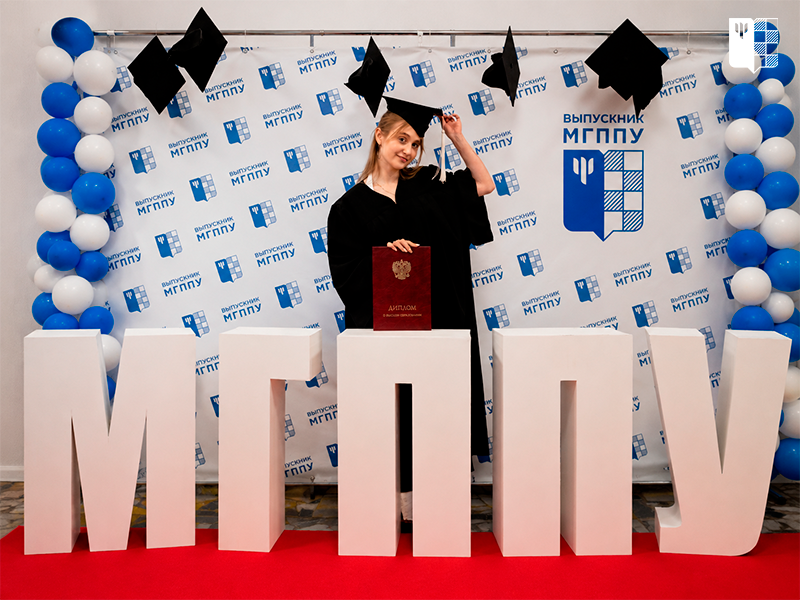
This year, the university graduated 1,033 specialists, 554 of whom received honors degrees. In the 44.00.00 "Education and Pedagogical Sciences" group, 488 people graduated, with 275 receiving honors.
At the Faculty of Social Psychology, 43% of graduates earned honors degrees. Most career paths are already set: a significant number received job offers and internship placements in their specialty before even defending their final theses. Several master's graduates are preparing for doctoral studies and are already involved in MSUPE research projects.
At the Faculty of Extreme Psychology, 50-55% of graduates receive honors each year, with 60-65% earning top marks. Students form ideas about their professional trajectories during their studies and practical training. Potential employers attend open classes, and students visit various organizations as part of orientation activities. The most successful students, motivated by research and education, are hired by their departments and faculties or enroll in doctoral programs. Several faculty members and teaching support staff are currently conducting dissertation research.
The 2026 graduating class at the Faculty of Legal Psychology consisted of 122 students, 57 of whom (46.7%) received honors degrees, reflecting the faculty's consistently high educational standards.
Dean Nikolay Dvoryanchikov noted: "Several students who completed internships in specialized organizations—including educational institutions, healthcare facilities, the Federal Penitentiary Service, the Ministry of Internal Affairs, and forensic centers—already have preliminary job offers. Seven graduates plan to pursue doctoral studies at MSUPE or other research institutions. Several bachelor's graduates have already applied to master's programs in 'Legal Psychology: Forensic Expert Practice' to deepen their specialization. The 2026 graduates demonstrate strong outcomes, reflecting labor market demand, quality training, and the breadth of their competencies".
In 2026, 101 students completed bachelor's programs at the Faculty of Educational Psychology. 70 received bachelor's degrees in 44.03.02 Psychological and Pedagogical Education: 22 as primary school teachers (graduate of "Psychology and Pedagogy of Primary Education") and 48 as educational psychologists (graduates of "Educational Psychology"), with 24 full-time and 24 part-time graduates. 31 students earned bachelor's degrees in Psychology (program: "Developmental Psychology"). 44 graduates received honors degrees.
Graduates of the primary teacher program benefit from comprehensive psychological-pedagogical and methodological training in primary education. Educational psychology graduates possess competencies aligned with contemporary psychology and pedagogy, as well as national education modernization efforts. Psychology graduates are equipped to address a broad range of professional tasks, including mental development across the lifespan (from birth to old age), family issues and parenting competence, gifted and struggling learners, adolescent development, and adult psychology.
"Thanks to our practice-oriented approach, graduates are sought after by employers in school psychological services, educational institutions at all levels, psychological and pedagogical centers, research and methodological centers, and social services. Graduates may also continue their studies in master's programs at the Faculty of Educational Psychology", emphasized Dean Maria Safronova.
Congratulations to our dear graduates! We are proud of you and wish you success in your careers, fulfillment of your dreams, and a bright, rich, and happy life! Go forth and prosper!