
Journal "Cultural-Historical Psychology" – On Practice-Oriented Research in BRICS+ Countries
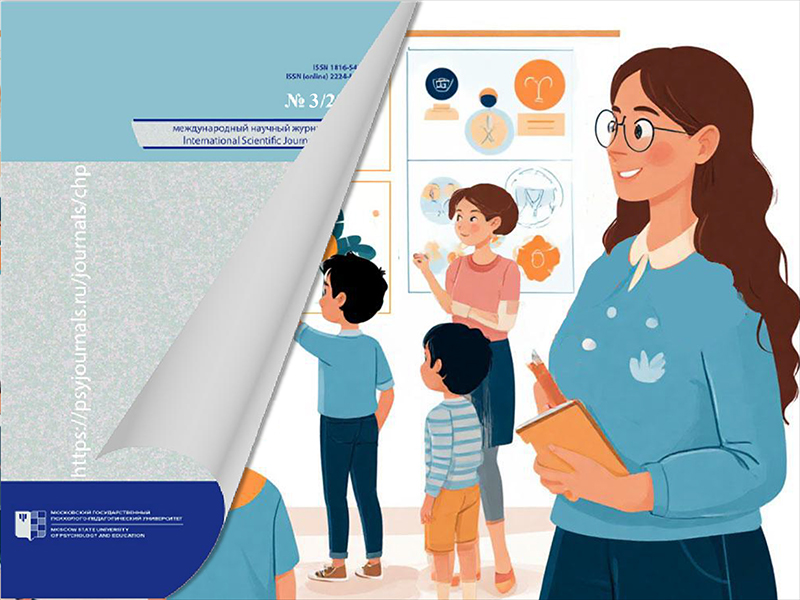
The third issue of the journal "Cultural-Historical Psychology" for 2025 (No. 3) has been published. This issue is themed "Cultural-Historical Psychology in BRICS Countries" (Brazil, South Africa, India) and Friendly Countries of the Post-Soviet Space (Belarus, Armenia, Kyrgyzstan).
The publications in this issue explore the dissemination, interpretation, and practical application of cultural-historical psychology within the distinct cultural, political, and socio-economic contexts of these countries.
The issue opens with three articles by Russian authors that sequentially describe the system-forming categories of cultural-historical psychology (V.V. Rubtsov, A.D. Maydansky), demonstrate the possibilities of constructing educational practices based on them (A.V. Konokotin, V.K. Zaretsky, I.M. Ulanoyskaya, O.V. Rubtsova), and substantiate the potential and prospects of cultural-historical psychology as a practice-oriented science (E.I. Isaev, S.G. Kosaretsky).
The main body of the issue presents a wide range of applications of cultural-historical psychology in educational practices, psychological assistance, and social activities.
In their article, Liberali F. C., Lemos M., and Modesto-Sarra L. K. (Brazil) present the Brincadas-COLINA project, which united children, educators, and families from quilombola communities, indigenous peoples, and urban peripheries. This project serves as a vivid example of an educational initiative that uses cultural-historical psychology (CHP) ideas as a tool for achieving social and epistemic justice, a goal particularly relevant for BRICS+ countries facing growing educational inequality.
In the article by Liberali F. C., Lemos M., Modesto-Sarra L. K. (Brazil), the Brincadas-COLINA project, which united children, educators, and families from quilombola communities, indigenous peoples, and urban peripheries in a joint practice, serves as a vivid example of an educational initiative that uses CHP ideas as a tool for achieving social and epistemic justice, which is particularly relevant for BRICS+ countries facing growing educational inequality.
A. Mutivi (South Africa) finds in Vygotsky's ideas a foundation for a decolonial approach in epistemology and pedagogy. This approach has legitimized indigenous knowledge and culturally conditioned social practices, opening opportunities for students and teachers to exercise agency aimed at social transformation, self-realization, and identity development.
Tanzi Neto A., Dieges U. C. C., and Magalhaes M. C. C. (Brazil) demonstrate how a teacher training program for foreign language teachers in Brazil, based on social activity and cultural-historical principles, contributes to the formation of culturally sensitive and socially transformative pedagogical practice.
In his article, Sandeep Kumar (India) examines the transformation of childhood in the context of globalization and digitalization through the lens of a social-constructivist approach. Other authors from India (Chander S. and Arora C.), drawing on the idea of the zone of proximal development, conceptualize digital tools as potential mediators between students' abilities and curriculum requirements.
The first-ever bibliometric analysis in CHP (A.A. Shvedovskaya, V.V. Ponomareva, A.A. Korneev) reveals the place of BRICS in the global landscape of cultural-historical psychology and the specificity of its research in relation to global trends. Separately, the article by Zoia Prestes, Elizabeth Tunes, and Mateus Thaler Beck covers the 40-year journey and current network of dissemination of L.S. Vygotsky's legacy in Brazil.
Articles by J. Hardman, Sinitsa T.I., and Bagdasarova N.A. convincingly show diverse ways to use cultural-historical theory in organizing inclusive education. A.M. Polyakov proposes an original approach to its application in providing psychological assistance to children and adolescents.
The full issue of the journal is available in open access on the portal of psychological publications PsyJournals.ru.
Listen to the PsyJournals LIVE podcast – in new episodes, authors discuss their research:
- Anna Aleksandrovna Shvedovskaya – on the landscape of cultural-historical psychology in BRICS+ countries
- Vagan Zhorayevich Sarkisyan – on the study of the cultural-historical vector of educational practices and socialization of children in modern society
- Subhash Chander and Chetna Arora – on the study of digital learning in classrooms with varying levels of preparedness
- Azvihangwisi Edward Mutivi – on the decolonization of pedagogy in post-apartheid South Africa
- Fernanda Coelho Liberali and co-authors – on rebellious pedagogy and the "Play Brigade" project (Brincadas)
- Zoia Prestes – on the dissemination of L.S. Vygotsky's cultural-historical theory in Brazil