MSUPE Presented a Strategic Technological Project at the CTL Expert Review at HSE University
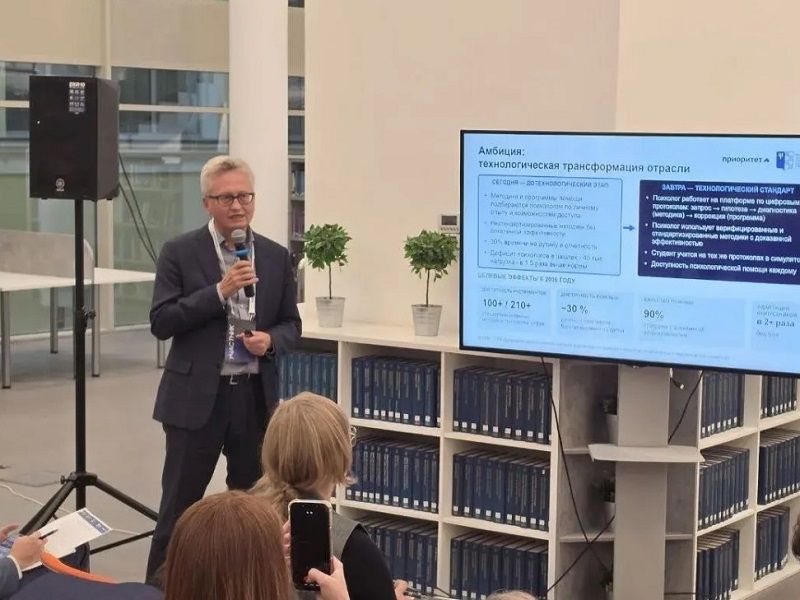
On November 25, a team from Moscow State University of Psychology and Education took part in the technological session "Education, Socio-Cultural, and Financial Services" hosted by the National Research University Higher School of Economics (HSE University). During the session, an expert review was held for MSUPE's strategic technological project, "Digital Technological System for Evidence-Based Psychological and Pedagogical Assistance and Specialist Training," implemented under the Priority-2030 program.
The technological session served as the in-person stage of the expert evaluation of universities' strategic technological projects. The series of sessions is organized by the Federal State Autonomous Scientific Institution "Sociocenter" and Gazprombank's Center for Technological Leadership. The work was structured as a peer-to-peer inter-university discussion alongside an expert review of the projects.
Reports were delivered by Sergey Gennadyevich Kosaretsky, Vice-Rector for Research at MSUPE, head of the strategic technological project, and Candidate of Psychological Sciences. He presented the project architecture, scientific, methodological, and technological groundwork, pilot testing results, implementation plans, and opportunities for cooperation with universities and technological partners.
The session was attended by Maria Alexandrovna Safronova, Head of the Priority-2030 Development Program at MSUPE, Dean of the Faculty of Psychology of Education, and Candidate of Psychological Sciences; Alexandra Andreevna Lisitsyna, Vice-Rector for Vocational Education at MSUPE and Candidate of Psychological Sciences; and Valery Alexandrovich Korotkov, Head of the Department of Web Platform and Service Development at MSUPE.
The strategic technological project integrates two interconnected areas: a digital platform for a psychologist's professional practice and a digital environment for specialist training and professional development. Both are grounded in professional activity protocols for educational psychologists. This approach enables the use of unified, evidence-based tools in both practical psychological work and the training of future specialists.
Among the areas for cooperation, the team presented proposals for joint pilot testing of the training environment, developing "protocol–simulator" integrations, and providing user support across the regions.
The presented developments are aligned with MSUPE's target model, "University of Digital Childhood," which focuses on integrating research, personnel training, and the creation of digital technologies for education and psychological assistance.