
Ethnopsychologist Wanted: Graduate of MSUPE's Master's Program "Practical Ethnopsychology" Talks About Her Work
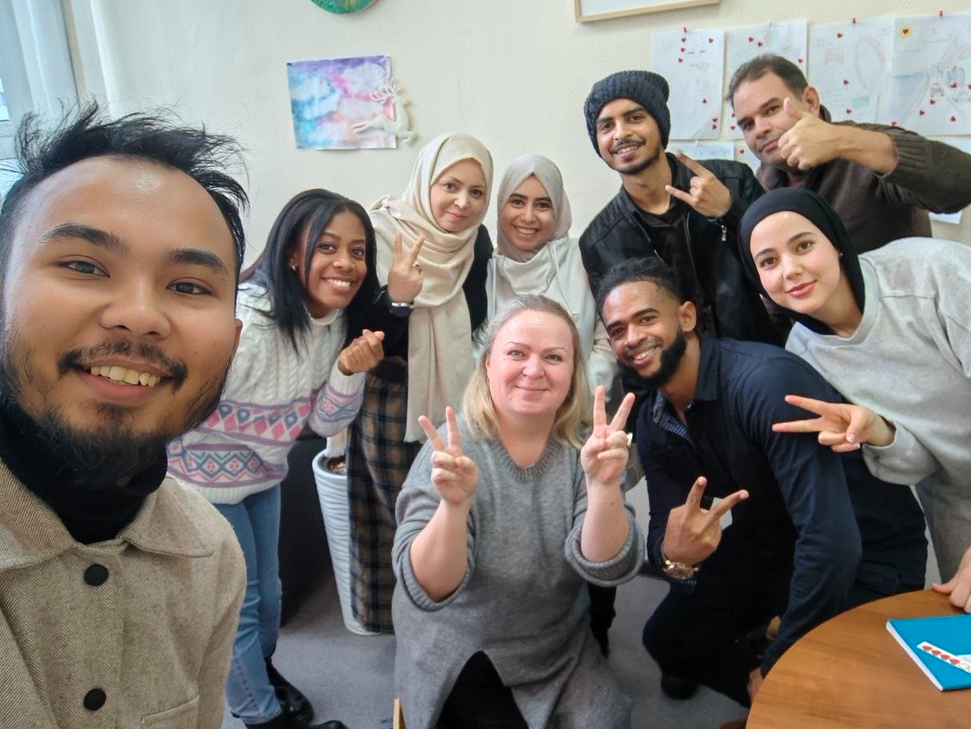
A year ago, the Department of Ethnopsychology and Psychological Problems of Multicultural Education received a request from L.V. Tsvetkova, Head of the Psychological Center at Moscow State University of Civil Engineering (NIU MGSU): the Psychological Center was inviting an ethnopsychologist to work in a multicultural educational environment.
The job responsibilities included: conducting individual and group consultations on interethnic communication, adaptation of migrants and representatives of different cultures; developing and conducting trainings aimed at developing tolerance, preventing xenophobia and ethnic stereotypes, preventing extremism, terrorism, and radical attitudes among youth, preventing drug addiction and other forms of addictive behavior; participating in research on cross-cultural psychology, migration, identity, and destructive behavior; consulting university faculty and staff on working in a multicultural environment and identifying at-risk groups; organizing events aimed at harmonizing interethnic relations and preventing deviant behavior among students; and interacting with law enforcement and social services when necessary as part of preventive work.
Now, after a year in the position, Yulia Yuryevna Dzuad, a 2024 graduate of the master's program "Practical Ethnopsychology" at the Department of Ethnopsychology and Psychological Problems of Multicultural Education, spoke about her work and the specifics of the profession.
What does an ethnopsychologist at a large Russian university do?
The largest portion of her work involves individual consultations with international students and group trainings as part of a program supporting psychological adaptation to studying at a Russian university. Notably, this adaptation support program first needed to be developed. Fortunately, she could draw on the best practices of the Department of Ethnopsychology and Psychological Problems of Multicultural Education at MSUPE, which had prepared Methodological Recommendations for implementing a program of psychological-pedagogical support for the learning, social, linguistic, and cultural adaptation of children of foreign citizens as part of a state assignment. She only needed to adapt this program to the university setting.
This year, she also prepared for a round table discussion on extremism and interethnic tolerance and developed a content plan for the university's social media channels on topics related to culture shock and adaptation problems.
A significant part of her work involves preparing and conducting classes for a tutor school. The tutors are volunteer upper-level students who will help newly arrived international students on preparatory courses adapt. These volunteers need to be taught the basics of intercultural competence – an understanding of the system of cultural differences, training in intercultural communication skills and abilities, and behavioral strategies in conflict situations, among other things.
Additionally, she participates in extracurricular activities for international students, which are quite diverse – national holidays, cultural festivals, quests, and quizzes that promote cultural cross-fertilization and the formation of bicultural identity in international students.
How do the knowledge and practical skills gained in the MSUPE master's program help you in your work now?
The knowledge that she now imparts in condensed form to future tutors has been invaluable: knowledge about cultural differences, approaches to deciphering behavioral strategies beyond causal attribution, psychological features of the adaptation process in a state of migration, the role of the religious factor in culture and its influence on personality psychology, the constructivist paradigm of understanding identity, and much more.
The most important principle in her work, firmly instilled by the teachers and supervisors of the ethnopsychological community, is to view each interlocutor as a bearer of three subsystems of properties simultaneously: universal human, culturally specific, and individual-personal.
The courses on conducting trainings, particularly intercultural ones, and psychological practices based on ethnocultural archetypes made an invaluable contribution to her preparation as a practicing ethnopsychologist. The practical part of her ethnopsychological training was significantly enriched by participation in methodological seminars, supervisions, film and reading clubs, ethno-schools, and other events organized by the Department of Ethnopsychology and Psychological Problems of Multicultural Education at MSUPE, which provide opportunities for exchanging knowledge, skills, and abilities with experts and more experienced colleagues.
What competencies are especially developed in the course of this work?
Currently, she considers intercultural sensitivity – one of the important components of intercultural competence – to be key. Sensitivity in simultaneously holding three fields of context, as mentioned earlier. The ability to see a person's uniqueness along with the specifics of their relationship to their culture of origin, while valuing each person as a representative of the human race in need of psychological assistance. She believes this can only be achieved through extensive, diverse, and rich interaction with representatives of different cultures. Working at a university where students from about 85 countries are represented fully meets this need.
Do you manage to combine practical work with research? Do you publish? Do you speak at conferences?
Yes, she does. Moreover, she manages to combine three professional identities: pedagogical, research, and that of a helping practitioner. At least twice a year, she participates in conferences on social psychology and ethnopsychology held under the auspices of the Faculty of Social Psychology and the Department of Ethnopsychology and Psychological Problems of Multicultural Education at MSUPE. She also participates in other conferences on psychological topics.
Regarding more serious scientific publications, her research niche lies at the intersection of philosophy, psychology, and religion. Access to high-status scientific journals is also ensured by close cooperation with the team of the Department of Ethnopsychology and Psychological Problems of Multicultural Education at MSUPE, particularly with the head of the department and her former research supervisor in the master's program – Olga Sergeevna Pavlova.
What makes the profession of ethnopsychologist interesting? How in demand is it?
Her own interest in the profession continuously grows in proportion to her awareness of its increasing social significance. This is confirmed not only in the counseling process, where she is increasingly in demand as a helping practitioner with ethnopsychological competencies, but also by the number of requests for her as an expert.
Just in the last month, she has spoken at two expert platforms – at MPGU and MSUPE – and written an expert article for the university newspaper on the occasion of the Year of Unity of the Peoples of Russia. Thanks to such initiatives at the highest state level, it is clear that the work of an ethnopsychologist is highly sought after in the Russian multicultural space. In the professional community of Russian psychologists, the multicultural approach has also recently been recognized as an independent cluster within the All-Russian Professional Psychotherapeutic League (OPPL).
There is no doubt that ethnopsychology will become increasingly relevant day by day, given the intensification of cultural exchange processes in the world and in our country. Intercultural competence is in demand today not only in education but also in medicine, services, social welfare – almost everywhere that involves interaction with people.
What, in your opinion, are the most important qualities of an ethnopsychologist?
Interest in novelty, particularly in communicating with different people and studying different cultures; a desire for professional and personal development; a broad outlook; flexible thinking; creativity; and, of course, empathy.
How do you maintain contact with your department?
To her great joy, the Department of Ethnopsychology and Psychological Problems of Multicultural Education at MSUPE provides many opportunities for maintaining contacts. She has already mentioned some: monthly online meetings – reading and film clubs, methodological seminars and supervisions, public lectures by leading faculty members; traditional annual participation in conferences, off-site ethno-schools, and extended departmental meetings.
She can say that the ethnopsychological community, supported by the efforts of the department's faculty and especially Olga Sergeevna Pavlova, is a very lively, active, and creative professional psychological environment. Once you become part of it, you never want to leave this truly warm and supportive circle of colleagues. She sincerely wishes further professional development and the expansion of the community for all.
What are your plans?
Her immediate plans include developing activities for the next academic year as the university ethnopsychologist. In her second year in the position, she plans to supplement the current work related to the adaptation of newly arrived international students with work aimed at developing the intercultural competence of Russian students, faculty, and staff of the university's departments and services. She is currently analyzing and selecting new interesting formats and forms of work for different audiences.
Of course, there are also personal plans related to professional development, writing new articles, and participating in conferences. And, of course, travel – to new countries, meeting new people and cultures.
Employer's perspective on what has changed in the work of the psychological service with the arrival of an ethnopsychologist:
"We came to the idea of inviting an ethnopsychologist to work at the university's Psychological Center through research and analysis of real problems in the psychological-pedagogical support of international students. The main challenges were: the influence of cultural context when seeking psychological help, the difficulty of designing adequate support measures and group work, and the lack of programs for tutoring and training teachers and staff involved in the educational process with international students. It became obvious that a psychologist without ethnocultural competence would not succeed here.
After a year of work by a graduate of the 'Practical Ethnopsychology' master's program, we see that the decision was correct. The systemic problems we initially identified have begun to be solved precisely at the level of the ethnopsychologist's competencies – from counseling that considers cultural and religious features to the development of training programs.
I recommend that other universities with a multicultural student body introduce such a position, but based on a preliminary analysis of their own 'pain points' – then the result will be strategic, not situational".
L.V. Tsvetkova, Head of the Psychological Center, NIU MGSU