
Cognitive Health in Later Life: New Research Data on the Resources of Active Longevity
Contemporary aging research is increasingly moving away from viewing an elderly person only through the lens of age-related changes and medical risks. The focus is shifting to the question of what conditions allow a person to maintain an active position, preserve cognitive health, and build their own self-care practices.
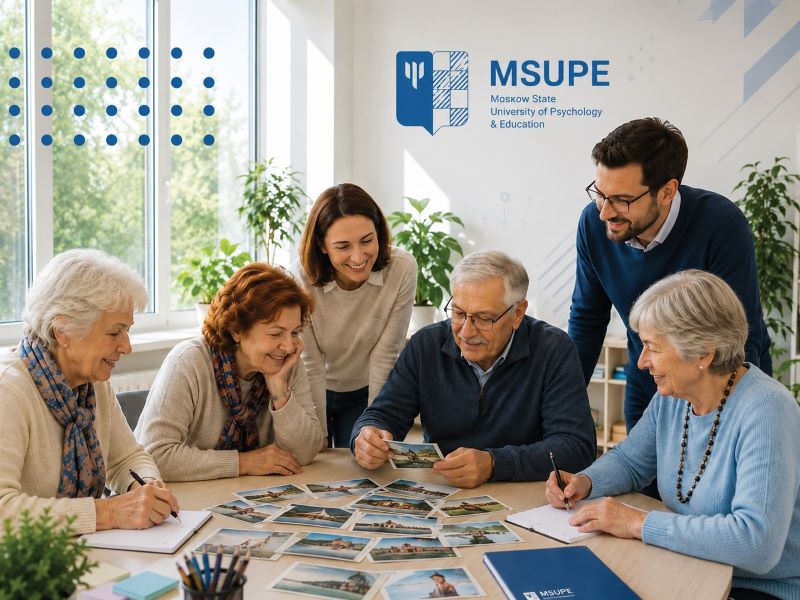
One such area is the study of the possibilities of Cognitive Stimulation Therapy (CST) in normative aging. A pilot study conducted at Moscow State University of Psychology and Education (MSUPE) as part of the "Moscow Longevity" project adapted a CST program for older adults without pronounced cognitive impairments. The research results were published in the journal "Clinical and Special Psychology" (preprint). The work is dedicated to the search for evidence-based non-pharmacological approaches aimed at maintaining cognitive functioning, social inclusion, and quality of life for older adults.
Unlike traditional cognitive training, which focuses primarily on performing individual exercises, CST combines intellectual activity, discussion of personal experiences, memory work, speech and creative tasks, and group interaction. The researchers viewed the program not only as a way to stimulate individual cognitive processes but also as a space for maintaining social inclusion.
The research results demonstrated high participant engagement and positive changes in quality of life indicators, primarily in the areas of social functioning and psychological well-being. The authors note that in normative aging, the effects of such programs may manifest themselves not so much through a marked increase in general cognitive indicators but through the support of those resources that help a person maintain activity in daily life.
This idea resonates with the study by Dmitry Rogozin and Alexandra Chentsova, "Masters of Health, or Who Shapes a Healthy Old Age." Based on four focus groups with retirement-age participants, the authors describe a particular position of older people who do not perceive health as a set of medical prescriptions but rather form their own "mastery of health".
For such people, self-care becomes a practice of observation, learning, and constant adaptation. Among the components of this mastery, the researchers identify regular monitoring of health status, a conscious approach to nutrition, physical activity, intellectual engagement, and the maintenance of social connections.
The authors emphasize that "masters of health" are distinguished not only by a set of healthy habits but also by their attitude toward aging: they act not as passive recipients of help but as active participants in the process of maintaining health. This position corresponds to a "logic of care", in which health is seen not as an individual project to achieve ideal indicators but as a process connected to a person's experience, environment, and daily practices.
Both studies demonstrate a common shift in the understanding of healthy aging: the focus moves from compensating for age-related deficits to creating conditions in which a person can maintain agency, social roles, and opportunities for development.
In this context, cognitive support programs in the format of complex cognitive stimulation can become part of a broader system of healthy longevity – alongside medical prevention, social activity, and physical exercise.