
Olga Pavlova Participates in a Scientific Seminar of the Department of Caucasian Ethnography at the Museum of Anthropology and Ethnography of the Russian Academy of Sciences
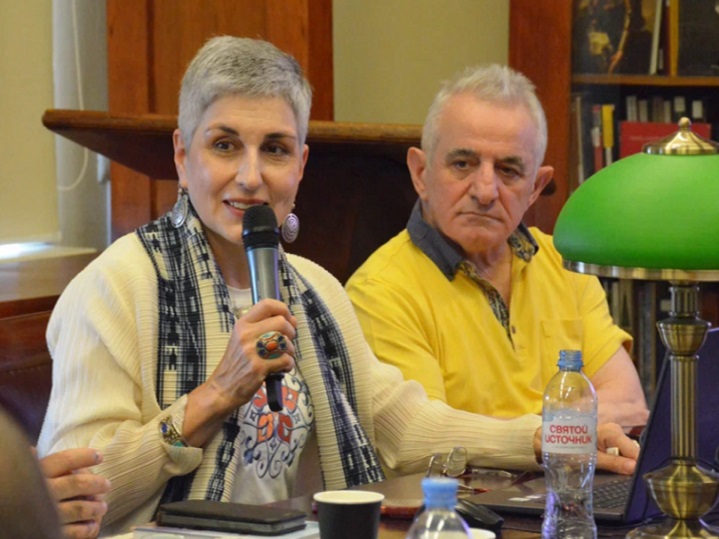
On August 3, the Department of Caucasian Ethnography of the Peter the Great Museum of Anthropology and Ethnography (Kunstkamera) of the Russian Academy of Sciences (MAE RAS) held another meeting of the scientific seminar "Caucasus: Crossroads of Cultures", entirely dedicated to the small Udi people. The theme of the seminar was "The Udi Ethnic Group: Historical, Linguistic, Cultural, and Anthropological Aspects".
The Udi are a small – just over 11,000 people worldwide – but very ancient Caucasian ethnic group (the Udi and their culture and religion are mentioned in the works of Strabo and Pliny). Currently, more than half of all Udi live in Russia. Preserving the cultural heritage of Russia's small ethnic groups is a crucial task for both specialists and activists among the representatives of the various ethnic groups of Russia.
The meeting brought together researchers from Moscow and Volgograd working in the fields of philology, philosophy, history, and ethnopsychology. The seminar discussions focused on the origins, language, religion, and contemporary identity of this ancient people.
Olga Sergeevna Pavlova, Head of the Department of Ethnopsychology and Psychological Problems of Multicultural Education, Faculty of Social Psychology, MSUPE, presented findings from her study of Udi ethnopsychology in her report "Ethnic Identity of the Udi in a Multicultural World". In a multicultural society, the Udi face the challenge of preserving their ethnic identity and passing it on to future generations. This necessitates the search for new and effective ways and forms of preserving, updating, and transmitting ethnic identity. The focus of her presentation was on the self‑presentation strategies of the Udi in a multi‑ethnic environment and the factors influencing the stability of ethnic identity among the younger generation.
Artem Ashotovich Kuranov (Candidate of Philological Sciences, Institute of Udi Studies) presented a comprehensive overview of Udi ethnogenesis, their connection to the Caucasian-Albanian heritage, and the evolution of their religious practices in his talk "The Udi – A Journey of Several Millennia: History, Language, Religion". He particularly emphasised the uniqueness of the Udi language.
Richard Arami Danakari (Doctor of Philosophical Sciences, Volgograd State Agrarian University) focused on the internal mechanisms of preserving the cultural code in his report "The Philosophy of the Udi 'Lifeworld': Unity in Diversity, from Tradition to New Identity". He showed how traditional Udi values are transformed in the context of globalisation without losing their semantic foundation.
The seminar participants included scholars from various Russian cities, as well as representatives of the Udi people.