
Psychological Aspects of Learning and Growing Up in the New Issue of the Journal "Psychological Science and Education"
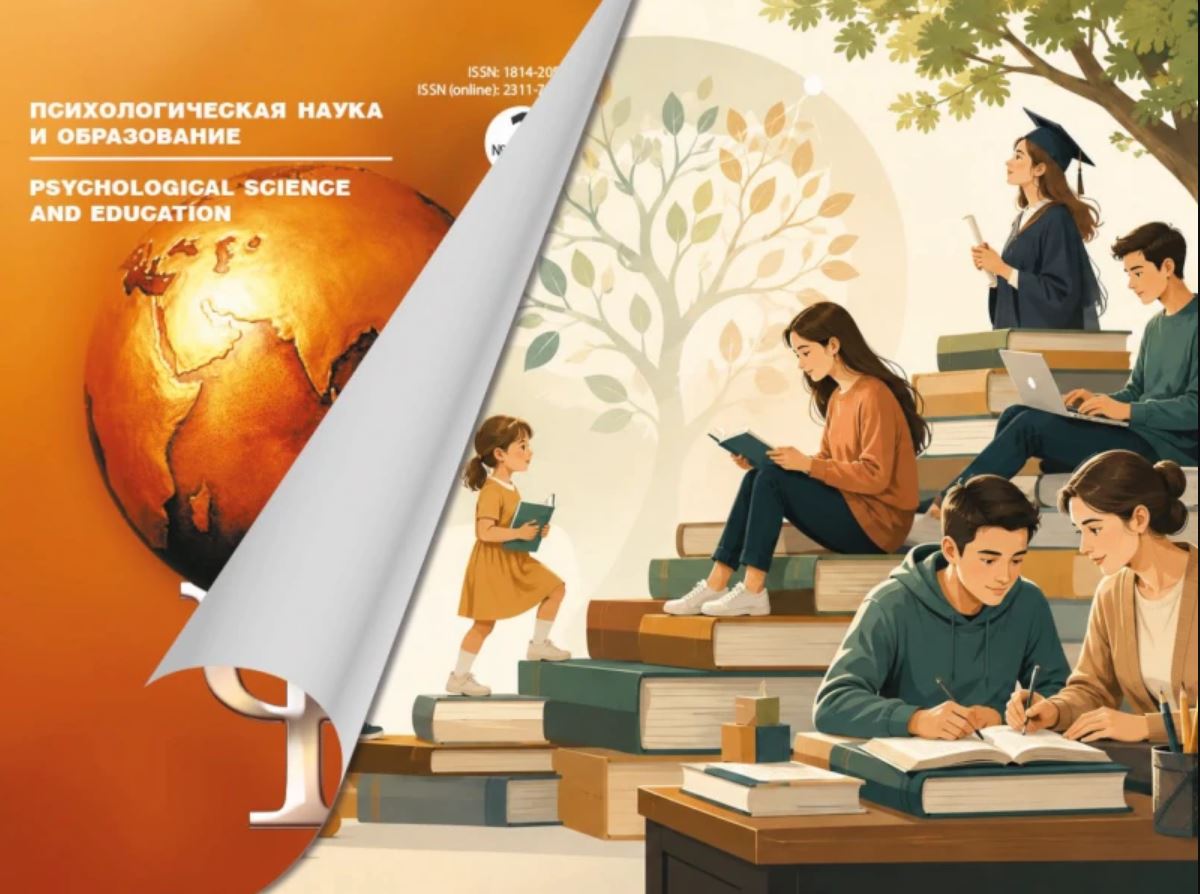
A new issue of the journal "Psychological Science and Education" has been published, focusing on the psychological patterns of the educational process and age-related development. The issue brings together contemporary empirical works that provide a deeper understanding of how various psychological mechanisms influence learning effectiveness, teachers' professional development, students' emotional state, and the dynamics of parent-child relationships.
The educational psychology section reveals key directions in the development of the pedagogical community. Materials are presented on improving teachers' professional competencies, as well as an analysis of common project practices in higher education. Special attention is paid to the internal resources that help educators develop: publications examine the relationship between reflection, coping strategies, and overall professional growth.
A significant portion of the issue is dedicated to psychological comfort in educational communities. Researchers analyse the nature of academic stress, ways to reduce psychological tension in students, and methods for preventing burnout. The materials reflect various approaches — from academic counselling and recreational therapy to studying the role of creativity and problem-solving skills in maintaining students' emotional balance.
The international perspective of the issue is shaped by studies conducted in different countries. They examine students' attitudes toward psychological support, factors of well-being in intensive educational programs, and the influence of the social environment — from peer support to the significance of school experience and everyday reflective habits. These works show how cultural and institutional characteristics shape educational trajectories and the psychological well-being of young people.
The developmental psychology section focuses on the patterns of personality development during school and university age, as well as the role of the family in this process. The articles study children's and parents' perceptions of academic performance, the importance of resilience for conscious parenting, and the formation of professional identity in young people. A special place is occupied by works on the risks of the school environment — in particular, factors of adolescents' involvement in bullying, adaptation mechanisms, and the influence of parental behaviour on the emotional state of high school students.
The issue concludes with materials on pedagogical attitudes and the productivity of professional activity. They show how future teachers' beliefs are reflected in their readiness to introduce value orientations into the educational process, and how innovative practices and behavioural strategies can improve teachers' performance.
The issue will be of interest to specialists in psychology and pedagogy, staff of educational organizations, and anyone seeking a better understanding of the psychological foundations of learning and personality development.
Listen to the authors of the issue on the PsyJournals LIVE podcast:
- Anastasia Dmitrievna Karpova shared the results of testing measurement invariance by gender and measuring academic stress.
- Hussam Khalifa Aldawsari spoke about the role of recreational therapy in anger control among students at King Faisal University within a behavioural correction program.
- Qiaofeng Deng presented the results of an empirical analysis based on structural equation modeling on the influence of the "supervisor – student" relationship on master's students' academic performance.
- Meilani Rohinsa spoke about the role of peer social support in academic resilience and the satisfaction of basic psychological needs.
- Asteria Devi Kumalasari presented the results of a study of an Indonesian accelerated master's program and student well-being.
- Moh Rosid Mahmudi spoke about the role of school educational background and everyday reflective practices in the development of emotional intelligence and existential competence among university students in Indonesia.
- Ifada Novikasari shared the results of a study on constructivism, instrumentalism, and how future teachers' beliefs influence the integration of mathematical values and sustainable development goals.
- Yuli Kurniawati presented a study on the moderating role of innovative work behaviour in improving teacher performance.
- Seid Alireza Derakhshanrad spoke about the mediating role of problem-solving in the relationship between creativity and academic burnout among students.
- Evgenia Vyacheslavovna Ivanova presented a study on the role of resilience in the structure of "responsible parenting."
- Mierrina Mierrina shared the results of studying the role of attachment to parents and emotional regulation training, as well as improving adolescent adaptation in the educational environment.
- Qian Wang spoke about the mediating role of alienation and the psychological mechanism of the relationship between parental phubbing and academic burnout among Chinese high school students.