A Strategic Session Was Held at MSUPE as Part of the Implementation of the University's Development Program "Priority-2030"
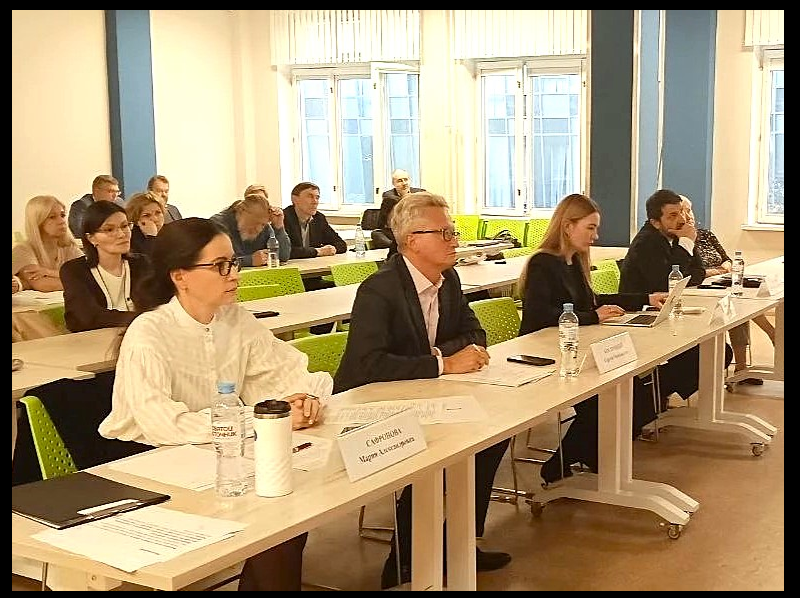
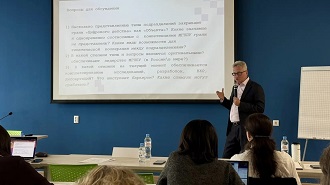
On October 1, a strategic session was held at the university, dedicated to working out recommendations based on the results of the cross-university expert review regarding the target development model of MSUPE — the "University of Digital Childhood."
At the first plenary meeting, the heads of educational, scientific, and scientific-practical departments presented the interim results of the implementation of the research program "University of Digital Childhood."
Then, vice-rectors, deans, and staff of MSUPE took part in the work of three groups. Each team included up to 20 staff members from the university's scientific, educational, practical, and administrative departments.
The first group, led by Vice-Rector for Professional Education Alexandra Andreevna Lisitsyna and Vice-Rector for External Relations Khozh-Akhmed Sultanovich Khaladov, discussed mechanisms for achieving the University's target model. This involved integrating educational, research, and practical activities, as well as developing the university's partnership system.
Led by Vice-Rector for Scientific Work Sergey Gennadievich Kosaretsky, the second group focused on discussing specialized markets, target audiences, the model of initiation, support, and commercialization, as well as mechanisms for translating these into industry norms and practices. Based on the results of the group's work, participants formulated proposals for the period until the end of 2026. These proposals centered on the marketing department: researching audiences and their needs, transforming conferences, and creating a product showcase. Options for digitizing products were also proposed through internal and external partnerships, educational programs, and consolidating all processes under one department.
The third group, together with the Head of the Priority-2030 Development Program Maria Alexandrovna Safronova, discussed the expected effects of achieving the University's target model and the metrics for their evaluation. Based on the results, proposals were formulated concerning updating digital childhood trends in the "Impulse" service, conducting pilot testing of the digital protocol for educational psychologists' activities, and further discussing the development of data-driven management mechanisms at the university.
The strategic session became an important internal stage in the work of the MSUPE team to achieve the target model.