
"Vygotsky's Time": New Issue of the Journal "Cultural-Historical Psychology" Opens an International Dialogue of Scientific Traditions
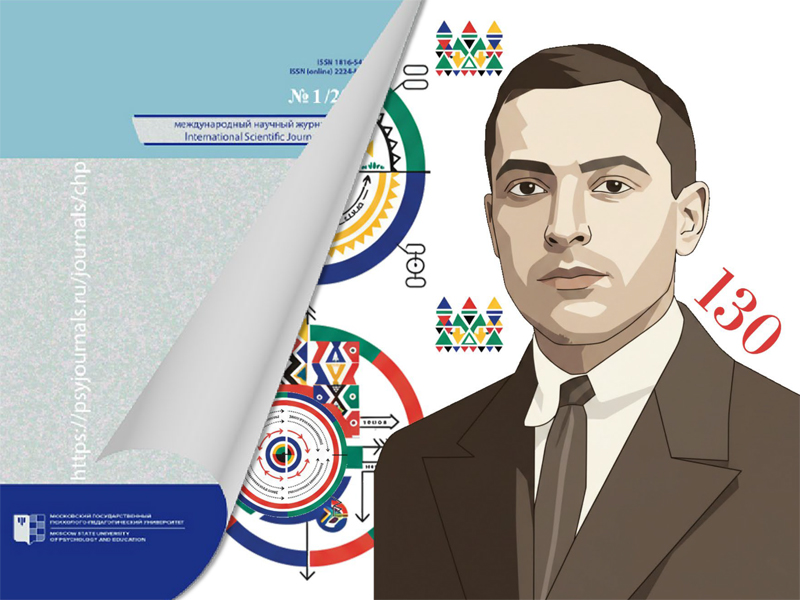
A new issue of the journal "Cultural-Historical Psychology" (2026. Volume 22. No. 1) has been published, prepared under the thematic guidance of Prof. V.V. Rubtsov and Prof. J. Hardman. The issue is timed to coincide with the 130th anniversary of the birth of L.S. Vygotsky and is dedicated to understanding the contemporary directions of development of cultural-historical psychology in the context of international scientific dialogue, primarily between the research traditions of Russia and the Republic of South Africa.
In the introductory remarks, the editors emphasize that the goal of the issue was not only to address the legacy of L.S. Vygotsky but also to identify those lines of development of cultural-historical psychology that are gaining applied significance today and determine solutions to pressing challenges in education and social practice. The issue is structured as a cohesive scientific composition, comprising four interrelated blocks: theoretical-methodological research, research conducted within the logic of cultural-historical psychology, materials on specialist training, and international experience in the development of the cultural-historical approach.
A special place in the issue is occupied by the publication of previously unpublished materials by L.S. Vygotsky — a transcript of his 1931 speech, in which he first formulates the ideas of "psychological physiology" and introduces the concept of extracerebral connections of higher mental functions. The theoretical section is complemented by contemporary works aimed at rethinking key concepts of cultural-historical psychology, such as "reflection" and "experience," viewed as central mechanisms of development and as tools for analyzing educational and psychotherapeutic practice.
The research presented in the issue demonstrates how the concepts of cultural-historical psychology are used as theoretical foundations and analytical tools in contemporary empirical work. These studies analyze the role of "experience" in the play activities of preschoolers, as well as the mechanisms of adolescent thinking formation in the context of collaborative activity mediated by cultural means, including the use of video fragments. It is shown that such forms of interaction trigger communicative-reflective processes that contribute to the development of understanding and problem-solving.
A separate section is devoted to issues of personnel training and the implementation of the cultural-historical approach in educational practices. The focus is on models for developing teacher professional thinking and the development of activity-based learning technologies. Special attention is paid to the risks of simplified and incorrect use of key concepts of cultural-historical psychology. In particular, it is emphasized that a superficial understanding of categories such as the "zone of proximal development," "mediation," and "scaffolding" can not only reduce the effectiveness of educational practices but also distort the very logic of the cultural-historical approach.
The international section of the issue reflects the development of cultural-historical psychology as a global research program. It features works dedicated to the integration of the approaches of L.S. Vygotsky and U. Bronfenbrenner in analyzing youth resilience, as well as materials summarizing the experience of international scientific events, including the Beijing Symposium on Special Education. These studies demonstrate that the cultural-historical approach retains its conceptual core while simultaneously transforming across different cultural and educational contexts.
As the editors note, this issue inaugurates a new series of regional thematic issues of the journal aimed at analyzing the development of cultural-historical psychology in various countries and scientific traditions. The dialogue between Russian and South African scientific schools presented in the issue allows us to capture both the stability of the approach's theoretical foundations and the new directions of its development in the context of contemporary social challenges.
Listen to episodes of the PsyJournals LIVE podcast, where authors discuss their research:
- Olga Viktorovna Salomatova on the phenomenon of experience and its role in the play activities of preschoolers.
- Maria Evgenievna Sisneva on cultural-historical orientations and innovative approaches to the development of special education.
The full issue of the journal is published in open access on the PsyJournals.ru Portal.