
On International Chess Day: About the "Chess for General Development" Project
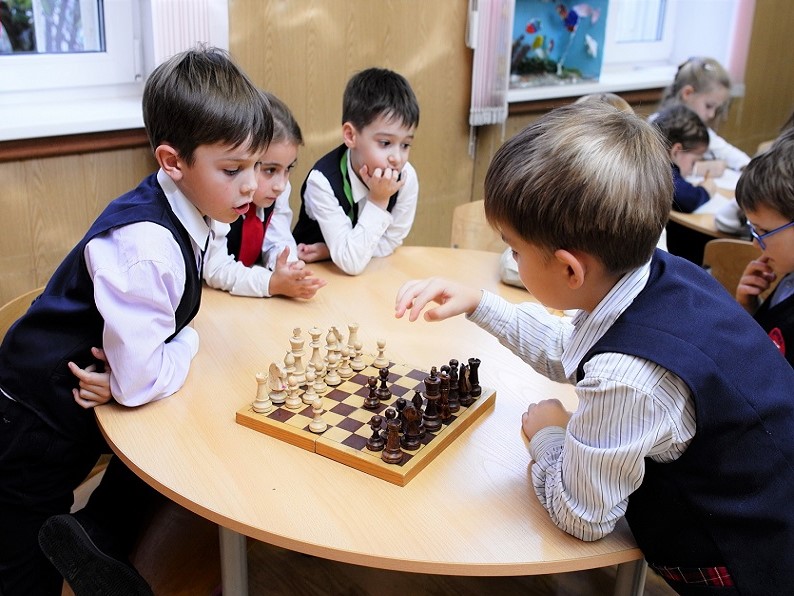
On International Chess Day, MSUPE highlights a significant educational initiative related to this ancient board game. The "Chess for General Development" project, led by Professor Viktor Kirillovich Zaretsky (Department of Individual and Group Psychotherapy, Faculty of Counseling and Clinical Psychology, MSUPE), International Grandmaster Yury Sergeevich Razuvaev, and Nikita Glebovich Alekseev, began in 2004 in Satka, Chelyabinsk Region, with the participation of the "Vertical" Chess Club. The project demonstrates how chess can serve not only as a sport but also as a powerful resource for general mental and personal development in primary school children. In Satka, students learn chess while also learning to plan, hold and transform situations in their minds, reflect on their next moves, and make decisions. They then discuss their actions with the teacher, turning the game into material for analysis and reflection.
According to V.K. Zaretsky, "one of the features of chess that constitutes an important resource for intellectual development is that chess training develops the ability to act in the mind. And if this ability transfers to other activities, it can have a powerful effect on general development."
Viktor Kirillovich emphasizes that "no one can win all the time" and cites the words of the 14th World Chess Champion Vladimir Kramnik: "chess teaches you how to lose." The experience of defeat becomes material for reflection — analysis and restructuring of one's approach to playing chess. During the game itself, very sharp positions can arise whose outcome cannot always be foreseen. Here, the player who does not give in to emotions, demonstrates stress tolerance, and can mobilize their resources in critical situations gains a psychological advantage. These qualities are also developed through chess training, becoming stable personality traits.
"The ability to creatively experience defeat, to learn from it, to understand the limits of one's current capabilities, to believe in the possibility of continuous improvement, to identify growth points, to learn to manage emotions, to maintain composure and extreme concentration in complex, critical situations – all these qualities can be developed through regular chess lessons, becoming stable character traits useful for any activity", notes Zaretsky. In the "Chess for General Development" project, these effects are purposefully supported: the discussion of games, analysis of moves, and joint reflection become part of the educational process.
Since 2005, the "Chess for General Development" method has been introduced in other schools, becoming a sustainable practice that combines chess, developmental education, and pedagogical reflection.
On International Chess Day, the university emphasizes the importance of such initiatives: they demonstrate how a game can become a means of developing important cognitive and personal qualities and support children on their educational and life journeys.