
MSUPE in the Media: "Rossiyskaya Gazeta", OTR, "Gazeta.ru"
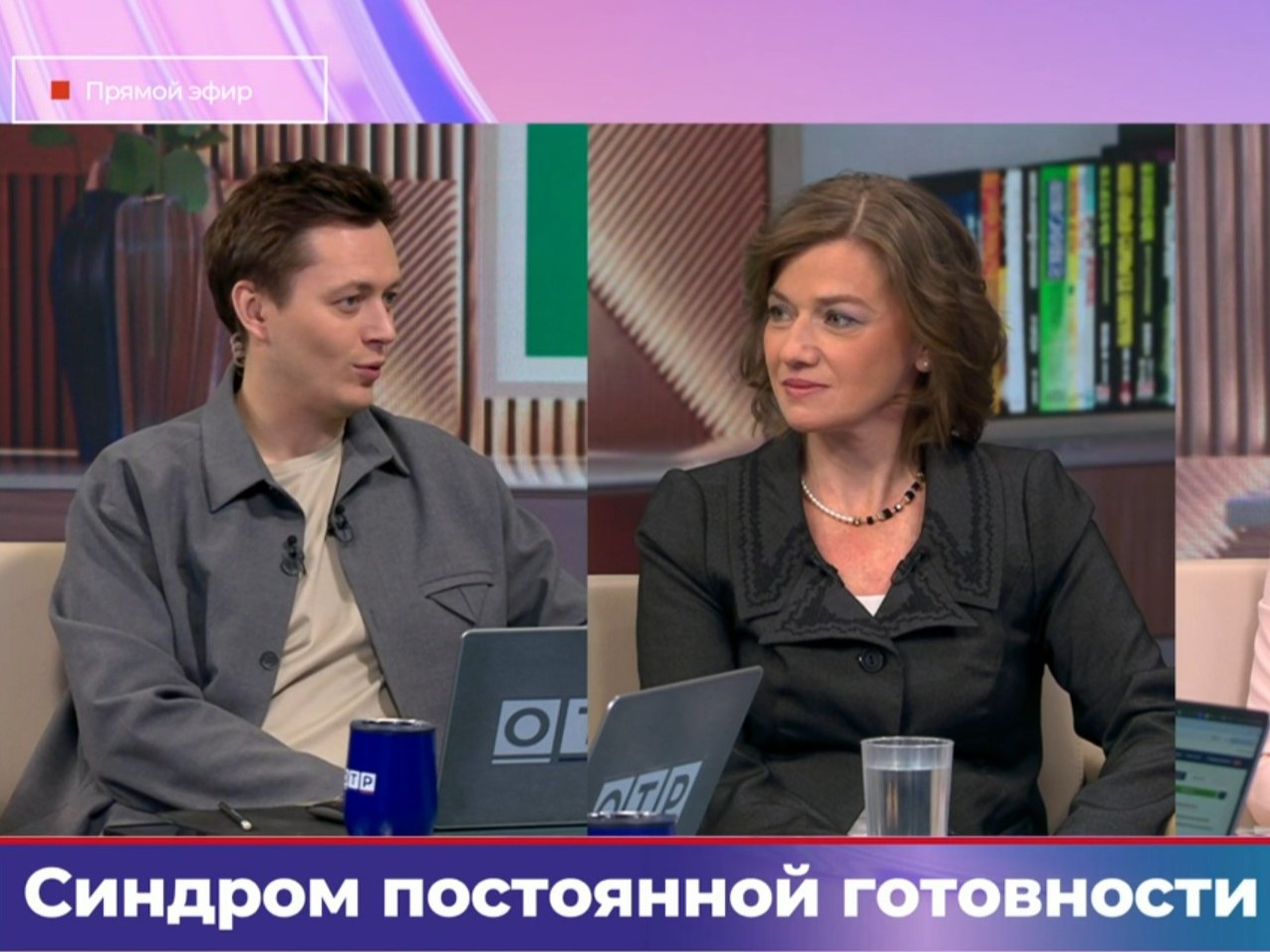
"OTRazhenie", OTR: Constant readiness or involvement syndrome is a feeling as if one cannot disconnect from the computer or phone: as soon as the gadget is put aside, the level of anxiety rises sharply. The brain does not get the opportunity to rest and continuously tries to solve some important tasks. Together with our expert — Yana Onkamo, psychologist of the emergency response and psychological counselling sector of the emergency psychological assistance department of the FCC for Ensuring the Development of Psychological and Pedagogical Assistance in the Education System of the Russian Federation at MSUPE — we will figure out what is dangerous about this state, why it is important to sometimes stop and listen to oneself, and what consequences life in a mode of constant haste, when the phone practically never leaves one's hands, can lead to.
Rossiyskaya Gazeta: In preschool education, upbringing and learning are not parallel actions but inseparable sides of a single holistic educational process. This opinion was shared by Professor at the Faculty of Educational Psychology, MSUPE, Yulia Kochetova. The new standard of preschool education is based on the ideas of Russian psychologists Vygotsky and Elkonin, which explain the interaction of learning and development, as well as the role of play in these processes.
Central Trade Union Newspaper "Solidarity": What are the dangers and strengths of closed groups, to what extent should "borders" be opened, how to work with "castes" so that they do not hinder the common cause. Explained by Olga Krushelnitskaya, Professor at the Faculty of Social Psychology, MSUPE.
MEL: A teacher plans to conduct a business game "Court" in class to analyze students' misdeeds — without the participation of parents and a school psychologist. Are his actions lawful? According to Nigar Aligaeva, Candidate of Psychological Sciences, Senior Lecturer at the Faculty of Legal Psychology, MSUPE, such a format is pedagogically dangerous and violates the law. The specialist emphasizes that the teacher has no right to arrange such proceedings and shares an alternative way to resolve the conflict.
Gazeta.ru: Researcher at the FRC ASD MSUPE Ulyana Mamokhina noted that there is no reliable evidence of a connection between screen time and the development of autism in children. The revealed statistical connection turned out to be insignificant, and possible explanations for the effect vary — from reverse dependence to the influence of an unknown third factor. The expert also reminded that, despite the absence of a cause-and-effect relationship, screen time should be limited and supplemented with games, communication, and walks.
Central Trade Union Newspaper "Solidarity": They keep to themselves and do not accept anyone, prefer to deal with "their own", and ignore outsiders. From a school class to company management, from a scientific institute to foreign "shadow governments" — the general principles of building a closed group are the same. Let's figure out how "castes" are formed. Olga Krushelnitskaya, Professor at the Faculty of Social Psychology, MSUPE, helped us understand.
MEL: It is not easy for teachers to find an approach when a child behaves difficultly, and parents are not ready to discuss his or her characteristics. Primary school teacher at the FRC ASD MSUPE Elena Krys comments: it is important not to make a diagnosis independently, but to record specific behavioural manifestations — for example, shouting out from a seat or conflicts with classmates. With these observations, one should approach the parents: discuss not the presumed diagnosis, but the child's difficulties and what help he or she needs now. Even without an official conclusion, the teacher should work with specific behaviour, not with an assumption about a diagnosis.
Central Trade Union Newspaper "Solidarity": To form a cohesive team, one needs to know by what rules it is built, how to motivate its participants for a common cause. However, people have different characters and knowledge. And if each of them is in their place and plays the part that suits them, the cause will only benefit. Let's figure out the distribution of team roles together with Olga Krushelnitskaya, Professor at the Faculty of Social Psychology, MSUPE.
MEL: Associate Professor at the Faculty of Legal Psychology, MSUPE, Oksana Gurina warns: encouraging snitching in class destroys trust between children and multiplies the risk of bullying. The expert explains that educators sometimes resort to such tactics due to lack of time, but in the long term, it causes serious harm to the psychological climate in the group. The psychologist emphasizes the importance of distinguishing "snitching for gain" from signals of danger — and gives recommendations to parents on how to discuss this topic with their child and correctly raise the issue with the school. Professor at the Faculty of Educational Psychology, MSUPE, Anna Adaskina cautions against a blanket ban on turning to the teacher: this way, a child may decide that asking for help is shameful and remain silent in a situation of real threat. According to the expert, the task of parents is not to forbid complaining, but to teach the child to distinguish when adult protection is really needed and when they are being used.
Russian Education: The first open parent online meeting of the 2026/27 academic year was dedicated to protecting children from fraudsters in the digital space. Olga Yurchuk, Deputy Head of the Federal Coordination Center for Ensuring the Development of Psychological and Pedagogical Assistance in the Education System of the Russian Federation at MSUPE, advises parents to discuss the topics of the lessons with their child on the same day — just like other school subjects. It is better to build the conversation through a request to "teach" the adult or through a situation with a third person, rather than asking direct questions about the child's personal experience — this way the dialogue will be more natural and trusting.
MEL: Candidate of Pedagogical Sciences, Associate Professor at the Faculty of Educational Psychology, MSUPE, Anna Semiletova explains: the school does not have the right to force parents to buy specific goods, and a teacher cannot ignore a child's work because of the colour of a notebook. The expert emphasizes that requirements for cover colours have no legal basis — there are no such norms in the Law "On Education in the Russian Federation", and local acts of the school should not restrict students' rights. According to the expert, under pressure from the teacher, parents should file a written application to the principal, and if the administration is inactive — turn to higher authorities and protect the child from psychological pressure.
Institute for the Study of Childhood, Family, and Upbringing: On the eve of the new lesson "Important Conversations" dedicated to cybersecurity, a methodological seminar "Child Safety on the Internet: How to Talk About Risks Without Intimidation" was held for teachers of schools and secondary vocational education institutions. Experts prepared teachers for a conversation with children about current threats in the digital environment, focusing on preventing involvement in criminal schemes. Deputy Head of the FCC for Ensuring the Development of Psychological and Pedagogical Assistance in the Education System of the Russian Federation at MSUPE Anna Ermolaeva noted the importance of support and sincere interest in the child's life.
Uchitelskaya Rossiya: The Russian Ministry of Education summarized the interim results of the "School of Trust" psychological assistance line, which operates on the basis of the FCC for Ensuring the Development of Psychological and Pedagogical Assistance in the Education System of the Russian Federation at MSUPE. From September 11 to October 6, specialists of the "School of Trust" psychological assistance line received 1,613 inquiries — an average of about 60 calls per day. Most often, people contacted the line regarding conflict situations and intrapersonal problems, as well as difficulties with studies.