
How to Preserve Cognitive Functions in Old Age: MSUPE Scientists Present a Review of Non-Pharmacological Approaches
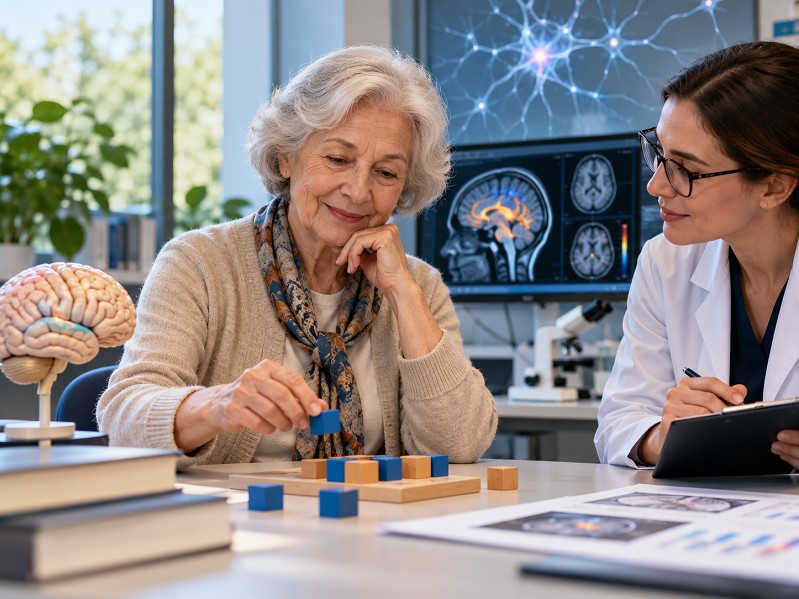
Which methods actually help maintain memory, attention, and thinking in old age?
Is it enough to train the brain with special exercises and computer programs?
What role do physical activity, emotional well-being, and social interaction play?
Answers to these questions are presented in a scientific review by researchers from Moscow State University of Psychology and Education (MSUPE), published in the journal Consortium PSYCHIATRICUM.
The article "Non-Pharmacological Approaches to Preserving Cognitive Functions in Normative Aging: A Narrative Review" was prepared by Anna Shvedovskaya, Vera Tretyakova, Anna Pavlova, and Anna Rytikova. The authors analyzed the results of 50 scientific works published between 2006 and 2026, including randomized controlled trials, systematic reviews, and meta-analyses.
The researchers focus on normative cognitive aging, that is, natural age-related changes in cognitive processes that are not accompanied by clinically significant cognitive impairment. This approach allows considering the preservation of cognitive health not only in the context of preventing disorders but also as an independent task of maintaining quality of life, activity, and independence in older age.
The authors compared three main areas of non-pharmacological interventions: cognitive training, physical activity, and practices for regulating psycho-emotional state.
Cognitive training – both traditional and computerized – demonstrates a positive effect primarily on the functions that are directly trained. At the same time, the sustainability of results increases if the program provides for gradual complication of tasks and supportive sessions.
Physical activity is characterized by a broader range of positive cognitive effects. Studies confirm the potential of aerobic and strength exercises, as well as motor practices combining physical load with cognitive tasks. However, the result depends on the duration, intensity, and regularity of sessions, as well as the individual characteristics of participants.
Mindfulness practices, breathing exercises, and biofeedback methods primarily contribute to reducing stress and improving psychological well-being. Their direct and sustained impact on cognitive functions still has a less convincing evidence base. Nevertheless, emotional regulation can create favorable conditions for preserving cognitive resources.
One of the fundamental conclusions of the review is that the effectiveness of non-pharmacological interventions is determined not only by the content of the exercises but also by the organization of the program itself.
The duration and regularity of sessions, the possibility of adapting the load to individual characteristics, maintaining motivation, and social interaction can significantly influence the results achieved.
The researchers pay special attention to multicomponent programs combining cognitive activation, physical activity, and social interaction. This approach allows taking into account the interrelation of cognitive, emotional, and social factors of aging.
As an example of an integrative model, the article examines cognitive stimulation therapy (CST) – a method combining cognitive activity, thematic discussions, emotionally significant tasks, and supportive communication. The authors analyze the development of CST, including group, individual, digital, and hybrid formats. At the same time, they emphasize that the existing evidence base for CST mainly relates to people with cognitive impairments and dementia, and the possibilities of applying integrative principles in normative aging require further study.
The analysis shows that cognitive aging is not a rigidly predetermined process. The preservation of cognitive plasticity in later life creates opportunities for targeted support of cognitive functions.
At the same time, the authors draw attention to the need for a more rigorous evaluation of the effectiveness of non-pharmacological programs. In particular, future studies should consider not only changes in cognitive test results but also the extent to which the effects obtained are reflected in a person's independence, daily activity, and quality of life.
The researchers consider the development of integrative programs combining cognitive stimulation, physical activity, and stress regulation methods, taking into account the individual capabilities and needs of older adults, to be a promising direction.
The work contributes to the formation of evidence-based approaches to maintaining cognitive well-being and identifies directions for further research and practical developments in the field of aging psychology.
Publication
Shvedovskaya A.A., Tretyakova V.D., Pavlova A.A., Rytikova A.M. Non-Pharmacological Approaches to Preserving Cognitive Functions in Normative Aging: A Narrative Review. Consortium PSYCHIATRICUM. 2026. Vol. 7. No. 4. CP15854.
About the Journal
Consortium PSYCHIATRICUM is an international peer-reviewed scientific journal published with the participation of the Russian Society of Psychiatrists and the Russian Association for the Advancement of Science. The journal is included in the 1st level of the Unified State List of Scientific Publications (EGPNI), indexed in the international Scopus database (Q2), and presented in PubMed.