Adaptation and Socialization of Minor Foreign Citizens: Head of the FCRC MSUPE Spoke About Support Measures at the All-Russian Meeting
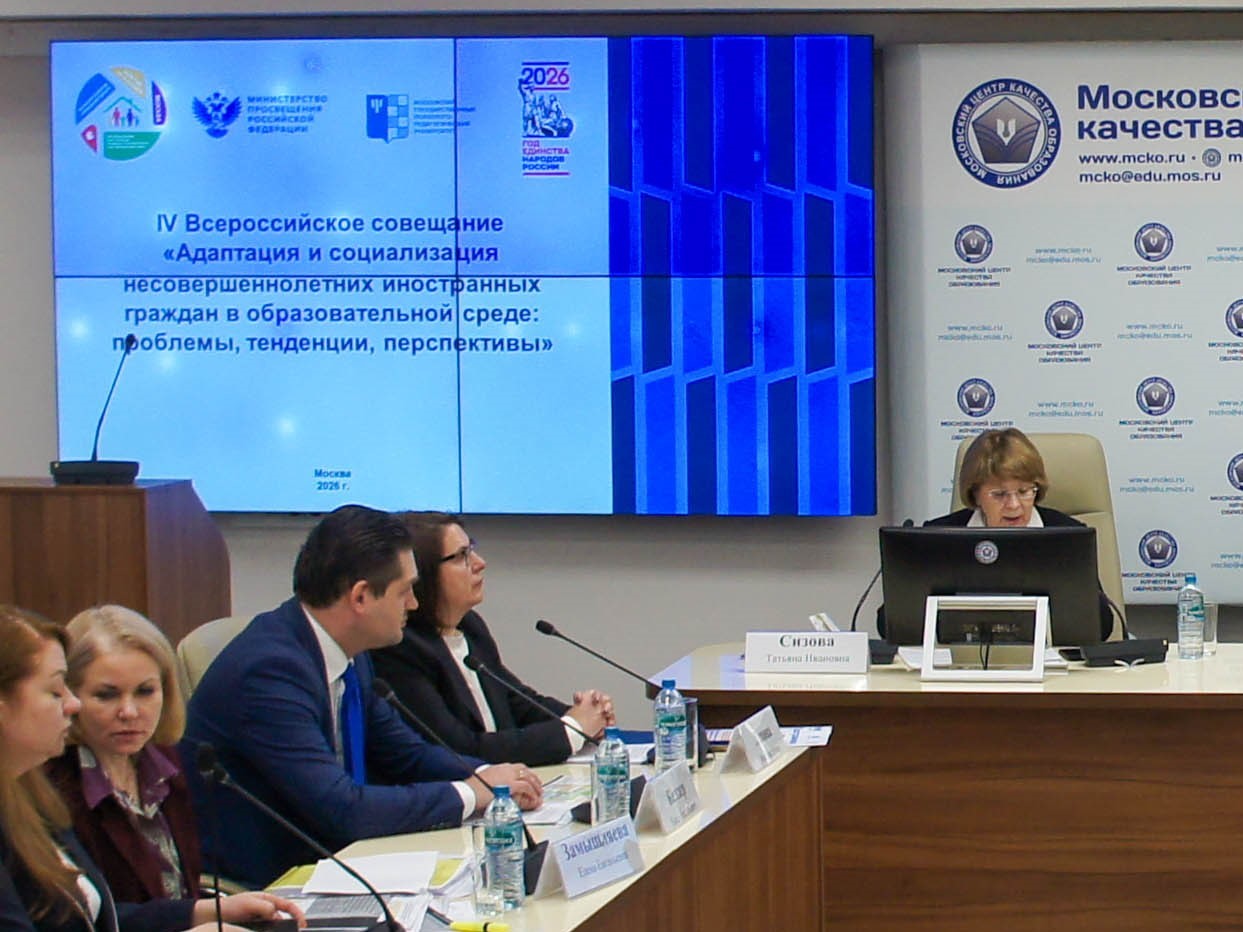
On November 10, 2026, the IV All-Russian Meeting "Adaptation and Socialization of Minor Foreign Citizens in the Educational Environment: Problems, Trends, Prospects" took place in Moscow. The event is held annually on the instructions of the Ministry of Education of Russia. The meeting was moderated by the Federal Coordination Resource Center for Psychological and Sociocultural Adaptation of Minor Foreign Citizens of MSUPE (FCRC MSUPE).
The goal of the All-Russian Meeting was to increase the effectiveness of measures for implementing the state migration and educational policy of the Russian Federation regarding the adaptation of minor foreign citizens legally residing on the territory of the Russian Federation.
The main report was presented by Larisa Falkovskaya, Director of the Department of State Policy in the Sphere of Children's Rights Protection of the Ministry of Education of Russia. She spoke about the mechanisms of information exchange as a tool for implementing the state policy on the adaptation of minor foreign citizens legally residing on the territory of the Russian Federation, and outlined the key tasks related to ensuring a sustainable mechanism of interagency interaction in supporting them for the purpose of sociocultural and linguistic adaptation.
In her speech, Tatyana Ivanovna Sizova, Head of the FCRC MSUPE, discussed the organization of measures in the constituent entities of the Russian Federation to promote the adaptation of minor foreign citizens. This work is carried out within the framework of the Comprehensive Plan of Measures for Linguistic, Sociocultural, and Psychological Adaptation of Minor Foreign Citizens. The plan covers those enrolled in educational programs of preschool, primary general, basic general and secondary general education, secondary vocational education, and higher education, for the period up to 2030.
The city of Moscow, the Moscow Region, and the city of St. Petersburg presented their experience of interagency interaction in working with minor foreign citizens.
Over 200 people participated in the meeting in a hybrid format (in-person and remote): representatives of federal executive bodies, deputy heads, and other representatives of executive bodies of the constituent entities of the Russian Federation exercising state administration in the field of education, as well as commissions on juvenile affairs and the protection of their rights of the constituent entities of the Russian Federation. Representatives of regional education management bodies, educational organizations, and heads of regional institutes for educational development joined the meeting via videoconferencing.