Recent Expert Comments in the Media: Channel One, OTR, Russia-1

OTRazhenie, OTR: The generation gap often manifests in misunderstandings between parents and children over gadgets, social networks, new hobbies, and ways to simplify daily life. Psychologist Lyubov Kushmylyova, Leading Analyst at the Scientific and Practical Center of Gerontopsychology at MSUPE, explains why the older generation often struggles to accept new things and relies on their own life experience. She also emphasizes that mutual acceptance and the quality of interpersonal relationships help mitigate this conflict.
Dobroe Utro, Channel One: Sometimes family life means noise, commotion, no time to be alone, and wanting to rest almost all the time. Yet even in such cases, scientists believe that family increases life expectancy—provided there are good relationships. And the stronger the relationships, the better the health. Single people have health problems more often—this is a proven fact. Moreover, chronic loneliness leads to a 30% decline in cognitive functions, reports Marina Rozenova, Professor at the Faculty of Extreme Psychology at MSUPE.
Vesti-Moscow, Russia-1: In Moscow, a criminal case was opened following the death of a teenage rooftopper in a ventilation shaft. Dmitry Deulin, Dean of the Faculty of Extreme Psychology at MSUPE, notes the significant influence of the internet, where examples of dangerous behavior for imitation are found. The specialist emphasizes that adolescent risk-taking is often fueled by a desire for self-assertion on social media and a wish to gain peer approval.
Moscow City News Agency: Teaching critical analysis of media content can reduce aggressive behavior in adolescents, as it helps them recognize manipulation and assess the consequences of spreading information. This was reported by Yulia Kochetova, Candidate of Psychological Sciences, Professor, and Acting Head of the Department of Developmental Psychology named after Professor L.F. Obukhova at the Faculty of Psychology of Education at MSUPE, commenting on the Federation Council's proposal to ban the posting of videos depicting juvenile offenses.
Gazeta.ru: Young women with anorexia often fail to notice physical changes that are obvious to others and continue to perceive their bodies as needing to lose weight. Natalia Vlasova, Candidate of Psychological Sciences and Associate Professor in the Department of Legal Psychology and Law at the Faculty of Legal Psychology at MSUPE, explains why fixation on the body and subjective assessment of appearance can be signs of an eating disorder. She also cites data on the prevalence of eating disorders in Russia and discusses how body dissatisfaction manifests in young women.
MEL: After children disrupted a lesson, the teacher forced the entire class to scrub the desks, sparking a debate among parents over whether such punishment is acceptable. Anna Semiletova, Candidate of Pedagogical Sciences and Associate Professor in the Department of Pedagogical Psychology named after Professor V.A. Guruzhapov at the Faculty of Psychology of Education at MSUPE, explains why asking students to clean up after themselves is not the same as using cleaning as a disciplinary measure. She also shares advice on how parents can clarify the circumstances of the situation and discuss classroom behavior responsibility with their child.
Komsomolskaya Pravda: Parents often want to equip their child in advance with a set of skills and knowledge that will help them get an education, make friends, and build relationships. Maria Bulygina, Candidate of Psychological Sciences and Associate Professor in the Department of Child and Family Psychotherapy at the Faculty of Counseling and Clinical Psychology at MSUPE, explains why there is no single criterion for success and why external achievements do not always reflect a person's internal state. She also notes that trying to fit a child into rigid standards does not guarantee their future success.
Central Trade Union Newspaper Solidarnost: People do not work solely for money: their attitude toward work and engagement are influenced by their value system, life experience, and beliefs about what matters. Olga Krushelnytskaya, Candidate of Psychological Sciences, Professor, and Head of the Department of Theoretical Foundations of Social Psychology at the Faculty of Social Psychology at MSUPE, explains how value orientations are formed before a person joins an organization and why an employer cannot completely override them. She also discusses how understanding employees' values helps build effective management.
Russian Education: The first meeting of the Open Club "Russian Education in the World" at the press center of the Ministry of Education of Russia brought together experts and educators to discuss the development of Russian education and the promotion of the Russian language abroad. Khozh-Akhmed Khaladov, Vice-Rector for External Relations at MSUPE, noted the high demand abroad for Russian practices in preschool and primary education, as well as psychological and pedagogical support. Meeting participants discussed modern educational initiatives, the scientific legacy of Vitaly Kostomarov, and new formats of international cooperation.
MEL: A son is about to start first grade: he has already learned to read, but barely understands what he reads. Anna Adaskina, Candidate of Psychological Sciences and Professor in the Department of Pedagogical Psychology named after Professor V.A. Guruzhapov at the Faculty of Psychology of Education at MSUPE, explains why such a gap between decoding text aloud and comprehending it can be normal at the initial stage of learning to read. She also shares advice on how to support the child and avoid turning reading into a difficult and uninteresting chore.
Dobroe Utro, Channel One: On public transit, at work, in every spare minute, they solve paper puzzles. That is a pastime for boomers, millennials say. You do not understand anything, Gen Z replies—and brings their sudoku books to a hobby club for seniors. The first generation of the internet era is turning to analog entertainment. It is no longer a "grandma's hobby": young people intuitively seek activities to relieve their nervous system. Black-and-white grids with numbers give the brain a chance to rest from visual and informational noise.
RBC: Being unable to forget a former partner is a story familiar to many. Darya Krasilo, Candidate of Psychological Sciences and Associate Professor in the Department of Developmental Psychology named after Professor L.F. Obukhova at the Faculty of Psychology of Education at MSUPE, explains why a breakup triggers a feeling of losing a part of oneself and how grieving mechanisms operate in this process. She also discusses when emotional distress can be overcome independently and when it is advisable to seek qualified help.
Vesti: Impulse buying often becomes a way to relieve emotional tension and get a dopamine hit from the anticipation of a purchase. Yulia Kochetova, Candidate of Psychological Sciences and Professor at the Faculty of Psychology of Education at MSUPE, explains why online marketplaces facilitate spontaneous spending and how the "dopamine loop" works. She also offers practical ways to manage the impulse: recognizing one's emotions, pausing, and postponing the purchase for 24 hours.
Gazeta.ru: According to a VTsIOM survey conducted in December 2025, 7% of adult Russians live with their parents or their spouse's parents. Artyom Degtyaryov, Senior Lecturer at the Faculty of Legal Psychology at MSUPE, notes that a shift in the age of entering adulthood is a global trend. The specialist refers to American psychologist Jeffrey Arnett's concept of "emerging adulthood," which describes ages 18–25 as a period of searching for one's path. According to the expert, difficulties with separation are especially noticeable in situations where the interests of parents and adult children diverge—for example, when wanting to change careers or enter into a relationship disapproved of by the family. "If a person experiences such strong guilt or fear of losing the favor of loved ones that they abandon their own plans, this may indicate insufficient psychological autonomy," the psychologist noted.
MEL: A son constantly talks during lessons and ignores reprimands, and the teacher even tried to tape his mouth shut. Elina Tretyak, Candidate of Psychological Sciences and Associate Professor in the Department of Psychology and Pedagogy at the Faculty of Distance Learning at MSUPE, explains why it can be difficult for a first-grader to regulate their behavior and why talks at home do not always yield results. She also explains how parents should handle the situation with the teacher and help their child learn to follow classroom rules.
MEL: A subject teacher who also serves as a homeroom teacher notices feelings of envy toward colleagues whom students love and respect. Luiza Istomina, Lecturer at the Faculty of Distance Learning at MSUPE, explains that behind this feeling may lie a need for recognition, a fear of one's own insignificance, and a desire to understand how valuable the teacher is to the children. She suggests not fighting the envy, but figuring out what exactly triggered it and turning it into concrete professional goals.
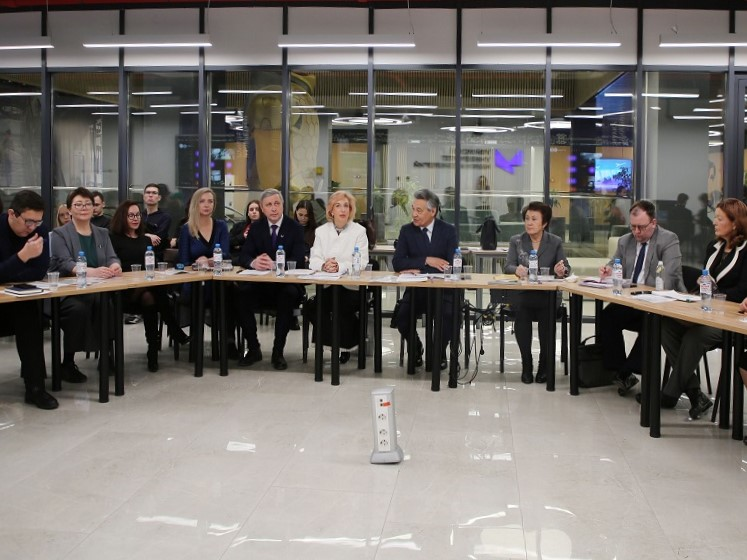
Komsomolskaya Pravda: On November 13, a round table titled "Independent Assessment of the Quality of Conditions for Carrying Out Educational Activities: Results and Successful Practices" was held in Moscow. Representatives of the professional community and educational organizations discussed the progress of the independent quality assessment (IQA) in 2026, its results, and universities' experience in improving learning conditions. Representatives of four universities, including MSUPE, shared their practices for improving learning conditions. Olesya Leonova, Head of the Scientific and Methodological Center for Supporting Teaching Staff and Executive Director of the All-Russian Public Organization "Federation of Educational Psychologists of Russia," examined the practice of establishing and operating a demonstration center for administering the demonstration exam in pedagogical specialties.
Rossiya Segodnya: Within the framework of the special project "Dialogues with Youth," a round table titled "Dialogues with Youth. Love and Other Hobbies" took place, dedicated to the difficulties Generation Z faces in building a family. Lyudmila Saulina, Psychologist in the Emergency Response and Psychological Counseling Sector of the Emergency Psychological Assistance Department at the Federal Coordination Center for the Provision of Psychological and Pedagogical Assistance in the Education System of the Russian Federation at MSUPE, explained why zoomers are in no hurry to form long-term partnerships and how to distinguish healthy relationships from codependency.