
"Guarantor of Quality IT Education": Projects of Universities and Business Discussed at the "Open Data" Forum
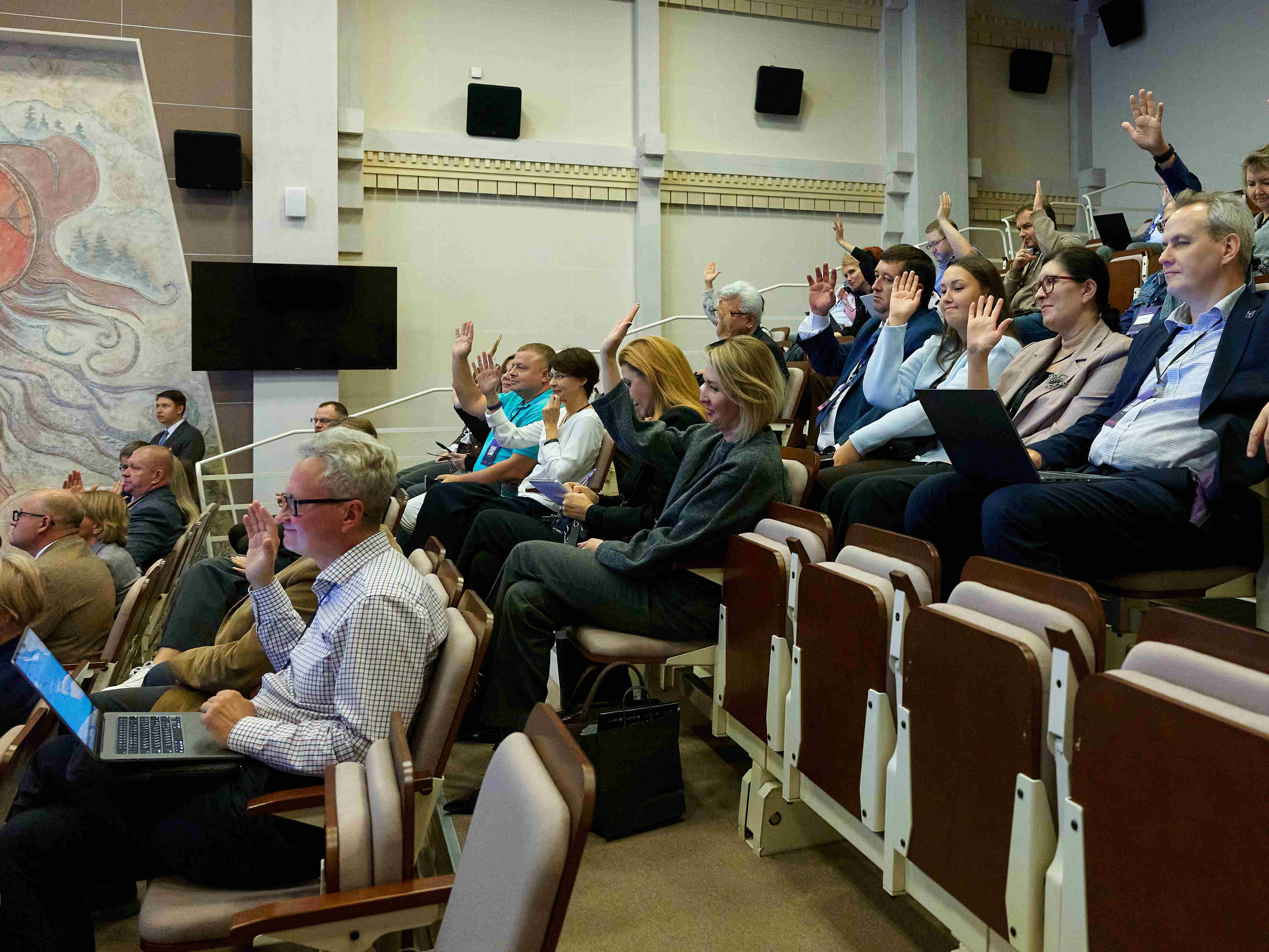
The VIII International Forum on Artificial Intelligence and Data Analytics Technologies "Open Data" was held on October 5–6 in the Altai Mountains. It brought together more than 300 participants from CIS and BRICS countries — representatives of over 80 universities, 30 companies, and associations. The organizers are the University Consortium of Big Data Researchers and Tomsk State University (TSU) .
The forum has been held since 2019. Today it is one of the leading expert platforms uniting Russian and foreign universities, government authorities, and business around artificial intelligence and data analysis technologies. In 2026, the forum was held with the participation of Altai State University and Gorno-Altaysk State University. Media partners — RIA Tomsk, Computerra, "Strategic Decisions and Risk Management", "Risk Management. Practice".
The central event of the forum was a meeting of IT company leaders and university vice-rectors dedicated to personnel training and the introduction of Russian software and hardware-software complexes into the educational process. As noted by the Executive Director of the ARPP "Domestic Software" Renat Lashin, the common goal of the meeting participants is to link Russian hardware and software solutions, education, and personnel training into a single technological contour.
"Cooperation between ARPP and the University Consortium has been developing for several years, and our meetings at the 'Open Data' forum are becoming increasingly practical. At one table, we can discuss current tasks from the positions of the regulator, the university, and the Russian developer. It is important that such dialogue does not end with the event itself. Together with colleagues, we are preparing proposals and resolutions on issues where universities and IT companies need practical solutions. It is through such work and the removal of specific barriers that the partnership of education, the IT industry, and the state develops", commented Renat Lashin.
During the forum, universities presented successful examples of cooperation with industrial partners. Thus, TSU Rector Eduard Galazhinsky spoke about a project with the company InfoWatch: the university is testing the Russian next-generation firewall ARMA NGFW on its cyber range to protect university and scientific infrastructure. The solution allows dividing the campus network into protected segments, detecting and blocking cyberattacks, controlling network traffic, and ensuring secure remote access. Furthermore, TSU scientists, together with colleagues from InfoWatch, have developed an approach that helps verify potential errors in program code and distinguish real problems from false signals through the use of LLMs. According to the industrial partner's assessment, the use of AI allows reducing the verification time for each warning by approximately half, freeing specialists from routine work.
Consortium General Director Vyacheslav Goyko noted that this and other cases of successful cooperation among association participants are restructuring IT education in Russia: "It is necessary to scale up best practices. The partnership of universities and IT companies is a guarantor of quality IT education. We organize the 'Open Data' forum, among other things, to form such partnerships. On the sidelines of the 2026 forum, new agreements were signed: three more universities joined the Consortium — now the association includes 91 universities, which have access to the accumulated expertise of our industrial partners".
According to Evgeny Bogdanov, Vice-Rector for Digital Transformation at Volga State University of Technology, it is extremely difficult for universities to act alone — consolidating efforts allows taking into account everyone's opinion and forming a position that will be heard by the external community: "The practice of holding meetings of vice-rectors and IT companies on the sidelines of the forum has already allowed us to take a noticeable step forward. We are all different, and identifying each other's needs is not an easy task, but the forum platforms help productively work through this. Such unification is aimed at achieving a big goal — the development of advanced technologies in the country".
The forum also discussed the digital transformation of the economy, data-driven management, the introduction of AI in industry, assessment of personnel needs through big data analysis, regulations for the use of AI in universities, and other topics.
Earlier we reported that MSUPE joined the association "University Consortium of Big Data Researchers".